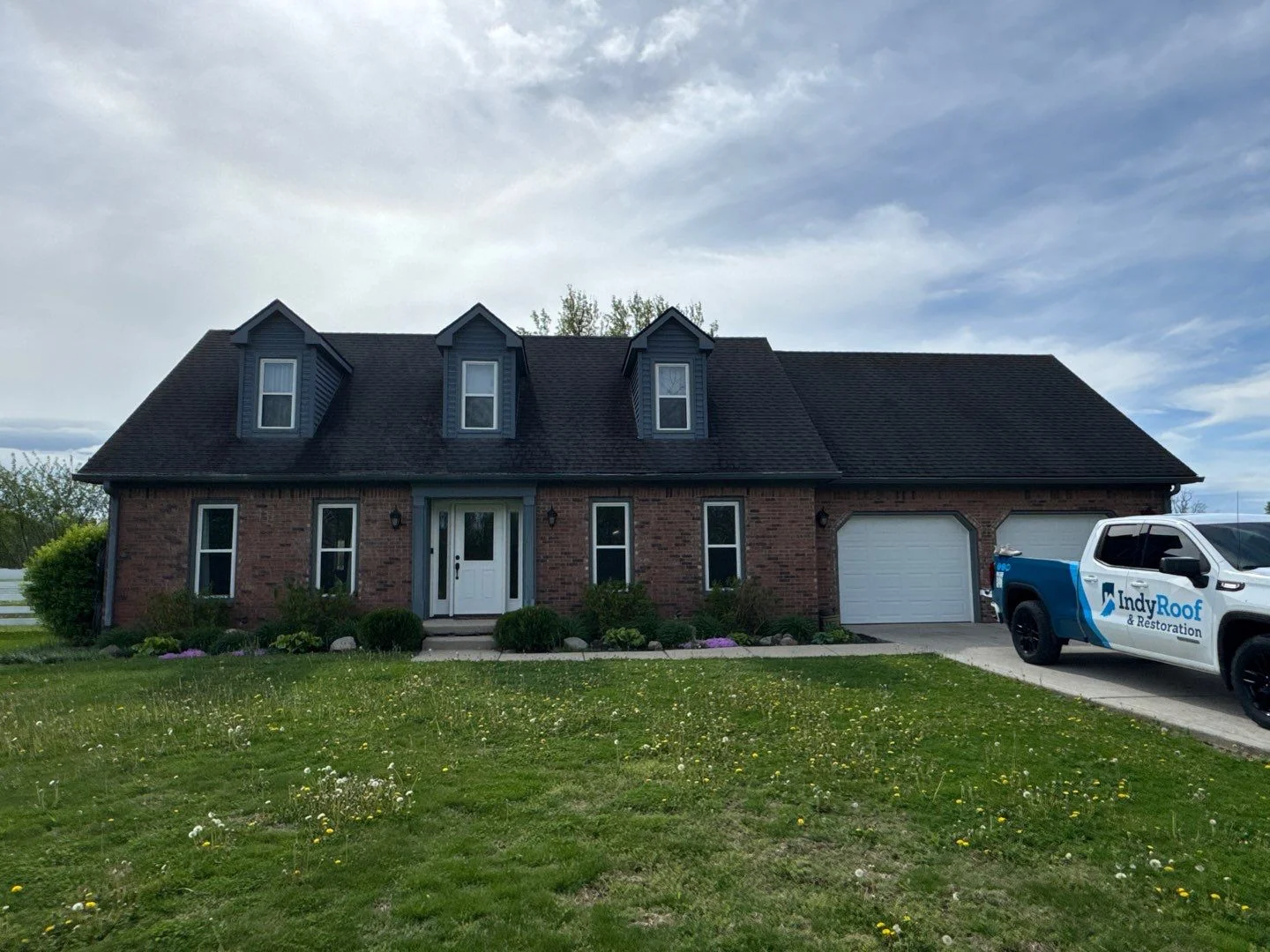
Problem: Your Asphalt Roof Keeps Losing Shingles in Wind Events
Central Indiana sees straight line winds in the 50 to 70 mph range several times a year, and older three tab shingles or builder grade architecturals often start lifting well below their rated threshold. You walk the yard after a thunderstorm and find tabs in the grass. That is not just cosmetic. Every missing shingle exposes the underlayment and accelerates deck rot.
Solution: Upgrade to a Properly Nailed Class 4 Asphalt System
The fix is usually two parts. First, we install a Malarkey or Owens Corning Class 4 impact resistant shingle rated for 110 to 130 mph winds. Second, we hand nail or use calibrated guns with six nails per shingle in the nailing zone, not four. A huge percentage of the blow off calls we run on other contractors' work come back to high nails, short nails, or overdriven nails that cut through the mat. Proper fastening alone can double real world wind performance on an asphalt roof.
Problem: Your Metal Roof Is Oil Canning and You Hate Looking at It
Oil canning is that wavy, rippled look you see on flat metal panels, especially on long runs catching afternoon sun. It does not affect performance, but on a $35,000 to $70,000 standing seam investment, you expect it to look crisp. Homeowners in Carmel call us frustrated because the installer told them it was normal and walked away.
Solution: Specify Striations, Heavier Gauge, and Proper Clip Spacing
Oil canning is reduced, not eliminated, through three choices made before the metal ever ships:
- Use 24 gauge steel instead of 26 gauge on runs longer than 20 feet.
- Specify striations or minor ribs rolled into the pan during fabrication.
- Use floating clips at correct spacing so the panel can expand and contract without binding.
When we quote standing seam, we walk you through these spec choices on the front end so you know what you are getting.
Problem: Asphalt Granule Loss Is Clogging Your Gutters
You clean your gutters and find a half inch of black grit in the bottom. Those are the ceramic granules that protect the asphalt mat from UV. Some granule loss is normal in the first few months after install. Heavy ongoing loss means the shingle is aging out, was defective, or took hail damage you never noticed.
Solution: Free Inspection and an Honest Answer
This is where we earn trust or lose it. If your roof has five good years left, we will tell you to keep cleaning gutters and wait. If the mat is exposed across multiple slopes, replacement is the right call and we will document it with photos so you can make the decision with real information. For Carmel homeowners who had a storm come through in the last year, we also check whether the loss is impact related, which changes the insurance conversation entirely.
Problem: Metal Roof Noise During Rain and Hail
The old stereotype of metal roofs sounding like a snare drum during storms still scares people away. On a barn with exposed rafters, yes, it is loud. On a modern home, it should not be.
Solution: Deck, Underlayment, and Attic Assembly Matter
A metal roof installed over solid decking with synthetic underlayment and a properly insulated attic is typically quieter than asphalt. Here is how we build the assembly:
- Solid 7/16 inch or thicker OSB or plywood deck, no skip sheathing.
- High temp synthetic underlayment rated for metal.
- Insulated attic with R-49 or better, which also dampens sound.
Do those three things and the rain on your metal roof will sound about the same as rain on asphalt.
Problem: You Cannot Tell if Your Quote Is Apples to Apples
Two contractors quote your Carmel home. One is $11,000, one is $18,000, both say asphalt. What gives?
Solution: Demand a Line Item Scope
Price gaps usually come from ice and water shield coverage, ridge vent type, starter strip quality, flashing replacement versus reuse, and whether decking repair is included or billed as a change order. Ask any contractor, including us, to put those line items in writing.
Problem: Mixing Metal Accents With Asphalt Field Looks Bad
A lot of Carmel homes have metal over porches, bay windows, or dormers with asphalt on the main roof. When those metal sections are the wrong profile, wrong color, or installed with exposed fasteners that rust, the whole roof looks cheap.
Solution: Match Profile and Color Intentionally
We treat accent metal as part of the overall design. Standing seam with hidden fasteners in a color that complements the shingle tone reads as a premium detail. Corrugated ag panel with exposed screws bleeding rust down your siding reads as deferred maintenance. The material choice is only half the job. The pairing is the other half.